
Healthcare Voice AI Platform: What Treatment Centers Should Look for in a Secure Admissions Workflow
A healthcare voice AI platform can help treatment centers manage inbound calls, admissions inquiries, appointment scheduling, follow-up, and other routine conversations. But treatment centers need a higher evaluation standard than simply asking whether an AI can answer the phone.
The platform may interact with sensitive health information, connect to scheduling and CRM systems, record conversations, and support admissions workflows. That means security, privacy, vendor contracts, escalation rules, and data handling need to be evaluated alongside voice AI capabilities.
For treatment centers, the right question is not “Can this AI talk to patients?” It is “Can this platform support our admissions workflow within the privacy, security, and operational controls we require?”
Key Takeaways
A healthcare voice AI platform should be evaluated for security, privacy, workflow controls, and human escalation, not just conversational quality.
A BAA may be required when a vendor is acting as a business associate and handling PHI on behalf of a covered entity or business associate.
HIPAA compliance and 42 C.F.R. Part 2 compliance are not interchangeable concepts.
Treatment centers should understand where call recordings, transcripts, CRM data, and other information are stored and processed.
AI should operate within a clearly defined administrative scope, with human escalation for sensitive or clinical conversations.
The treatment center remains responsible for evaluating its own risks and compliance requirements.
What Is a Healthcare Voice AI Platform?
A healthcare voice AI platform uses artificial intelligence to handle voice conversations as part of a healthcare organization’s workflow.
For a treatment center, that could include answering inbound admissions calls, responding to approved administrative questions, qualifying inquiries, scheduling assessments, confirming appointments, following up with dormant inquiries, or routing conversations to staff.
The platform becomes more than a phone-answering tool when it connects those conversations with operational systems such as a CRM, calendar, scheduling platform, alerts, call records, and follow-up workflows.
That integration is also where the evaluation becomes more serious.
Why Treatment Centers Need a Higher Standard
A missed sales call is a business problem.
A missed admissions call can involve someone seeking help at a particularly important moment.
Treatment centers also operate around sensitive information. Depending on the organization and the information involved, HIPAA and other federal or state requirements may apply. Substance use disorder programs may also need to consider the confidentiality requirements under 42 C.F.R. Part 2.
That means a voice AI platform needs to support the center’s privacy and security requirements rather than simply adding automation to an existing phone system.
HIPAA Compliance Is More Than a Vendor Claim
Treatment centers should be cautious about evaluating vendors based on a “HIPAA-compliant” badge or statement alone.
The HIPAA Security Rule requires regulated entities to implement appropriate administrative, physical, and technical safeguards for electronic protected health information. HHS also emphasizes that risk analysis is foundational to determining appropriate safeguards.
The practical question is therefore broader:
What data does the platform handle, how does it handle that data, who can access it, where is it stored, how long is it retained, and what controls protect it?
Those questions should be answered before deployment.
When Does a Voice AI Vendor Need a BAA?
If a vendor creates, receives, maintains, or transmits PHI on behalf of a covered entity or business associate, the vendor may be acting as a business associate under HIPAA.
HHS guidance states that a covered entity or business associate can use a cloud service to process or store ePHI when the applicable requirements are met, including entering into a HIPAA-compliant business associate agreement when required.
For a treatment center evaluating a healthcare voice AI platform, the BAA conversation should therefore happen early.
Ask:
Will the platform handle PHI?
In what parts of the workflow?
Is the vendor acting as a business associate?
Will subcontractors have access to the information?
Does the vendor provide the required BAA?
What uses and disclosures are permitted under the agreement?
What happens to data when the relationship ends?
A BAA does not make an entire workflow automatically compliant. It is one component of the broader privacy and security framework.
What About 42 C.F.R. Part 2?
Treatment centers that provide substance use disorder services may also need to consider 42 C.F.R. Part 2.
Part 2 provides confidentiality protections for certain SUD patient records maintained by covered programs. HHS issued a final rule in 2024 that aligned certain aspects of Part 2 more closely with HIPAA while retaining important Part 2 requirements. The compliance date for the 2024 final rule was February 16, 2026.
This matters when evaluating voice AI for rehab, detox, and other SUD treatment workflows.
A vendor that says it supports HIPAA should not automatically be assumed to satisfy every Part 2 requirement relevant to a treatment center’s specific workflow.
The center should determine which rules apply and have its privacy or legal professionals evaluate the implementation.
What Should a Secure Healthcare Voice AI Platform Include?
Security should be evaluated across the entire data lifecycle.
Area | What to evaluate |
|---|---|
Access control | Who can access conversations, recordings, transcripts, and account data? |
Authentication | How are users and administrators authenticated? |
Auditability | Can the organization review relevant system activity? |
Data transmission | How is information protected while being transmitted? |
Data storage | Where is data stored and what safeguards protect it? |
Retention | How long are recordings and transcripts retained? |
Deletion | What happens when data should be deleted? |
Subprocessors | Which third parties process or store information? |
Integrations | What information moves between the AI and CRM or scheduling systems? |
Incident response | What processes exist for security incidents and breaches? |
Business continuity | How does the platform handle outages and recovery? |
The exact controls should be assessed against the organization’s own risk analysis and requirements.
Call Recordings and Transcripts Need Special Attention
Voice AI platforms often create records beyond the conversation itself.
A call may generate a recording, transcript, summary, call metadata, CRM activity, appointment record, and internal alert.
That creates multiple places where sensitive information may exist.
Treatment centers should ask:
Are calls recorded by default?
Can recording be disabled?
Are transcripts created automatically?
Where are recordings and transcripts stored?
Who can access them?
How long are they retained?
Can retention periods be configured?
Are recordings and transcripts sent to third-party AI or analytics services?
Can data be deleted according to the organization’s policies?
A secure architecture is not only about protecting the primary database. It is about understanding the full data flow.
Data Minimization Should Shape the Workflow
The safest AI workflow is not necessarily the one that collects the most information.
If an appointment confirmation call only needs to confirm a time, the AI may not need access to a full patient record.
If an inbound admissions call requires only basic information to route the inquiry, the workflow should not automatically expose unrelated information.
HHS guidance emphasizes appropriate safeguards and limitations around access and use of PHI. Treatment centers should work with their privacy and security teams to determine what information is necessary for each AI workflow.
Human Escalation Is a Core Requirement
A healthcare voice AI platform should have clear boundaries.
An AI agent can be useful for defined administrative tasks, but a treatment center should not assume that every conversation can or should be handled automatically.
A conversation may need human involvement when someone:
Requests an admissions representative
Asks a clinical question
Shares sensitive information outside the AI’s approved scope
Raises a concern requiring professional judgment
Becomes distressed
Requests information the system is not authorized to provide
Needs an exception to the normal workflow
The AI should recognize these situations and follow a predefined escalation path.
What Should AI Handle in a Treatment Center Admissions Workflow?
The exact scope depends on the organization, but a useful division is:
AI can support | Human team should handle |
|---|---|
Basic appointment information | Clinical questions |
Scheduling within approved rules | Clinical assessment |
Appointment confirmation | Complex eligibility decisions |
Routine admissions questions | Sensitive case discussions |
Lead qualification using approved criteria | Situations requiring professional judgment |
Callback requests | Crisis or safety-related concerns |
Follow-up reminders | Exceptions outside the approved workflow |
Routing and live transfers | Conversations requiring trained staff |
This division does not mean every administrative conversation is risk-free. The center should define its own approved use cases and escalation rules.
Integrations Matter as Much as the Voice AI
A healthcare voice AI platform rarely operates alone.
It may connect to a CRM, scheduling system, lead forms, calendars, communication tools, or other applications.
Each integration creates another potential data path.
Before implementation, map:
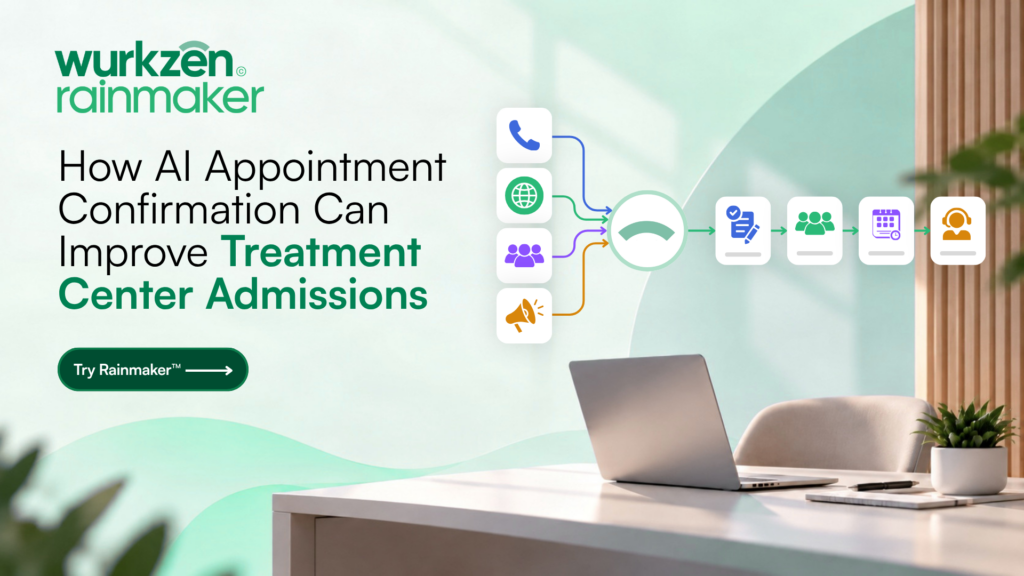
Caller → Voice AI → AI services → CRM → Scheduling system → Staff alerts
Then ask what information moves at every stage.
For example, if a call transcript is automatically pushed into a CRM, the treatment center should understand what information is transferred, who can access it, and how the CRM handles that information.
What Treatment Centers Should Ask a Voice AI Vendor
A serious vendor evaluation should go beyond asking for a product demo.
Ask these questions before signing:
Security and privacy
What security controls protect customer data?
How are access permissions managed?
What audit capabilities are available?
How is data encrypted?
How are security incidents handled?
What documentation can the vendor provide for its security practices?
HIPAA and BAAs
Will the vendor sign a BAA when required?
Which services and data flows are covered by the BAA?
Which subprocessors may handle PHI?
What responsibilities belong to the treatment center versus the vendor?
Data handling
Are calls recorded?
Are transcripts generated?
Where are recordings and transcripts stored?
What are the default retention periods?
Can retention be configured?
Can the organization delete stored information?
AI behavior
Can administrators control what the AI can say?
Can approved knowledge sources be restricted?
Can sensitive topics trigger escalation?
Can the AI transfer calls to staff?
Can workflows prevent the AI from answering outside its approved scope?
Integrations
Which CRM and scheduling platforms are supported?
What information is synchronized?
Can permissions be restricted?
Are integration activities logged?
How to Evaluate a Vendor Beyond the Demo
A polished demo does not tell you how a platform behaves under real operational conditions.
Ask the vendor to walk through an actual workflow.
For example:
New admissions call → AI answers → inquiry is qualified → assessment is scheduled → confirmation call occurs → caller requests rescheduling → appointment changes → activity is recorded → staff receives an alert
Then introduce an exception.
What happens if the caller asks a clinical question?
What happens if the caller asks for a human?
What happens if the scheduling system is unavailable?
What happens if the person asks not to be contacted again?
The answers reveal more about the platform than a scripted product demonstration.
Where Rainmaker Fits
Rainmaker is designed as a voice AI platform for the full lead and customer lifecycle, rather than a single receptionist use case.
For treatment centers, that can include inbound admissions response, lead qualification, scheduling, appointment confirmation, follow-up, reactivation, and live transfer to staff.
The platform can also provide activity visibility through call records, transcripts, alerts, and CRM-connected workflows.
For a treatment center, the value is in connecting these workflows while maintaining clear boundaries around what the AI is permitted to handle.
Any healthcare deployment should still be evaluated against the center’s own privacy, security, contractual, and regulatory requirements before handling protected information.
A Practical Evaluation Checklist
Before choosing a healthcare voice AI platform, confirm that you can answer “yes” or have a documented answer to each relevant question:
Can the vendor explain its data flows clearly?
Can it support the required BAA?
Has your organization completed the appropriate risk assessment?
Can you control user access?
Can you understand who can access recordings and transcripts?
Can retention and deletion requirements be addressed?
Can the platform identify and route conversations outside the AI’s scope?
Can it transfer calls to human staff?
Can the AI operate from approved information?
Can CRM and scheduling integrations be controlled?
Can activity be monitored?
Can the vendor explain its subprocessors?
Have applicable Part 2 requirements been evaluated?
Has your privacy, security, compliance, or legal team reviewed the implementation where appropriate?
Common Mistakes Treatment Centers Should Avoid
Choosing a vendor based only on conversational quality
A natural-sounding AI is useful, but voice quality is only one part of the evaluation.
Security, workflow control, integration, escalation, and data governance matter just as much.
Assuming a BAA solves everything
A BAA is important when required, but it does not replace the treatment center’s own risk analysis, policies, procedures, or security responsibilities.
Ignoring transcripts
Organizations often focus on recordings while overlooking automatically generated transcripts and summaries.
Treat them as part of the overall data flow.
Treating HIPAA and Part 2 as the same thing
Part 2 has specific confidentiality requirements for certain SUD records. Treatment centers should evaluate whether and how Part 2 applies to their workflows rather than relying on a generic HIPAA statement.
Automating before defining escalation
The AI should have clear rules for when to stop and involve a person.
Define those rules before launch.
Frequently Asked Questions
A healthcare voice AI platform uses AI to conduct voice conversations as part of healthcare workflows such as scheduling, inbound response, appointment confirmation, lead qualification, and follow-up.
Potentially, yes. HIPAA does not prohibit the use of cloud or AI technology simply because it handles ePHI. The organization must meet applicable HIPAA requirements, including appropriate safeguards and business associate arrangements when required.
A vendor may need a BAA when it is acting as a business associate and creates, receives, maintains, or transmits PHI on behalf of a covered entity or business associate. The specific relationship and data flow should be evaluated.
No. Treatment centers providing services covered by 42 C.F.R. Part 2 should evaluate the Part 2 requirements that apply to their records and workflows separately.
Look for clear data flows, appropriate security controls, access management, auditability, retention and deletion controls, BAA support where required, controlled AI behavior, human escalation, integration safeguards, and a clear approach to applicable regulatory requirements.